
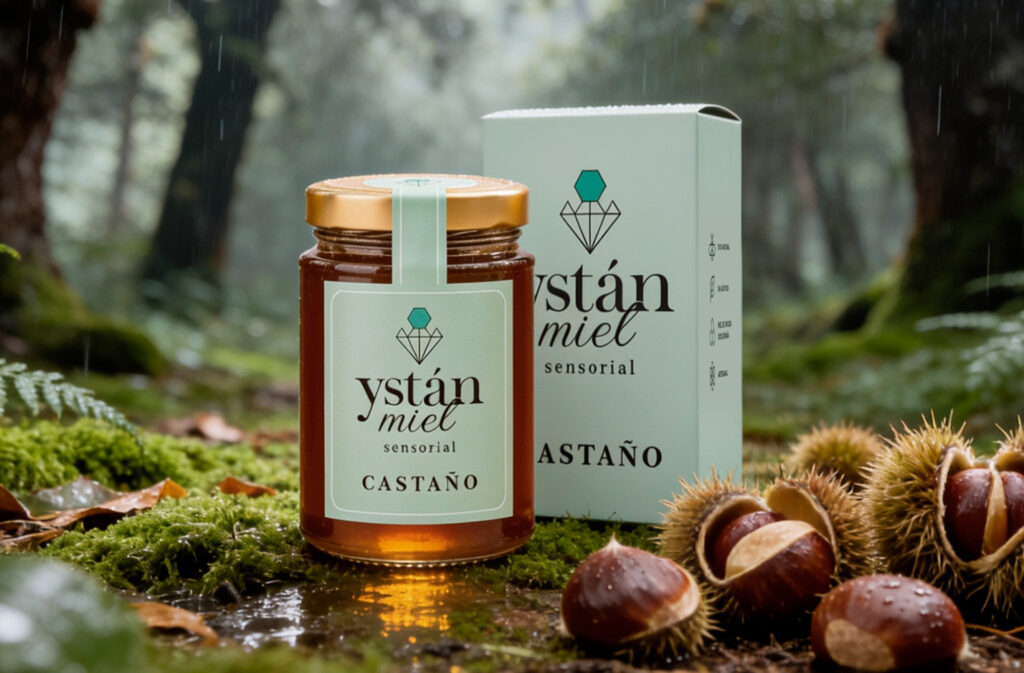
Chestnut honey is one of the most prized monofloral varieties for those seeking intense and complex flavors.
Its distinctive character, marked by woody notes and a slightly bitter touch, clearly sets it apart from milder honeys. It also typically has a high concentration of phenolic compounds and a very characteristic aromatic profile.
What is chestnut honey?
It is obtained primarily from the nectar of chestnut blossoms.
To produce monofloral honey, the hives must be located in areas where this flowering is predominant during the harvest season.
The result is a honey with a very distinctive identity that reflects the landscape from which it originates.
Origin of chestnut honey
In Spain, production is concentrated in mountainous areas with significant chestnut groves, such as the Genal Valley in Málaga, Galicia, El Bierzo, Asturias, and other areas of northern Spain.
The climatic conditions of each harvest season influence the color, aroma, and yield of the chestnut honey.
Sensory characteristics
Its color typically ranges from dark amber to deep brown.
The aroma is reminiscent of wood, forest, and nuts, while the flavor is persistent, with a moderate sweetness and a pleasant bitter note.
The texture is usually dense and spreadable.
Properties of chestnut honey
Like all natural honeys, it provides energy thanks to its fructose and glucose content.
It also contains enzymes, amino acids, minerals, and antioxidants.
Chestnut honey is typically notable for its content of phenolic compounds, which are partly responsible for its dark color and some of its antioxidant capacity.
How to recognize good chestnut honey
A transparent label, a clearly identified origin, an intense aroma, and a complex flavor are good indicators of quality.
Crystallization is completely natural and should not be interpreted as a product defect.
Crystallization
Depending on its composition and storage temperature, chestnut honey may crystallize more slowly than other varieties.
When this occurs, it retains its qualities and can regain a more fluid texture by gently warming it in a double boiler, without overheating.
Culinary uses
It pairs especially well with aged cheeses, meats, nuts, yogurt, toast, and pastries.
Its distinctive character also makes it suitable for preparing sauces and marinades with an intense flavor.
How to store chestnut honey
It should be stored in a cool, dry place, away from direct sunlight.
Refrigeration is not recommended, as cold temperatures accelerate crystallization.
A honey with a distinctive identity
Chestnut honey is a variety with a distinctive sensory profile and a strong identity linked to chestnut forests.
Choosing a quality honey means enjoying a natural product that preserves the character of the territory, the work of the bees and the experience of the beekeeper.